Why Sea Turtles Matter
Around the globe, sea turtles play vital ecological roles in maintaining healthy marine environments, from seagrass meadows and coral reefs to sandy nesting beaches.
Although they share a similar body shape and marine lifestyle, each species has its own distribution, diet, behaviour and conservation story. Some roam across entire ocean basins, while others remain closely tied to coastal habitats. All are vulnerable to threats such as marine debris, fisheries bycatch, boat strike, habitat loss, climate change and pollution.
Australia is especially important for sea turtles, supporting globally significant nesting and foraging areas. In the waters around Magnetic Island and the Townsville region, three species are most commonly encountered: the Green Turtle, Flatback Turtle and Hawksbill Turtle.
Photo: Brocken Inaglory
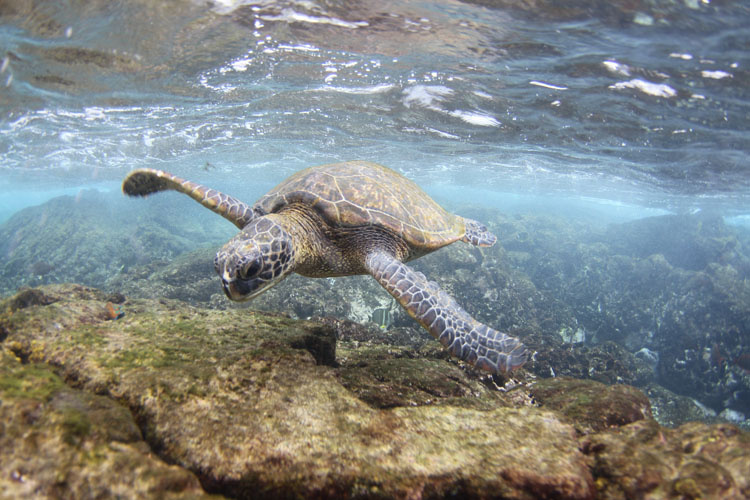
Green Turtle
Chelonia mydas
Green turtles are among the best known of all sea turtles. They are found in tropical and subtropical waters around the world and are strongly associated with seagrass meadows and coastal foraging grounds. Adults are largely herbivorous, feeding mainly on seagrass and algae.
Status: Endangered
Photo: Lily Donnelly
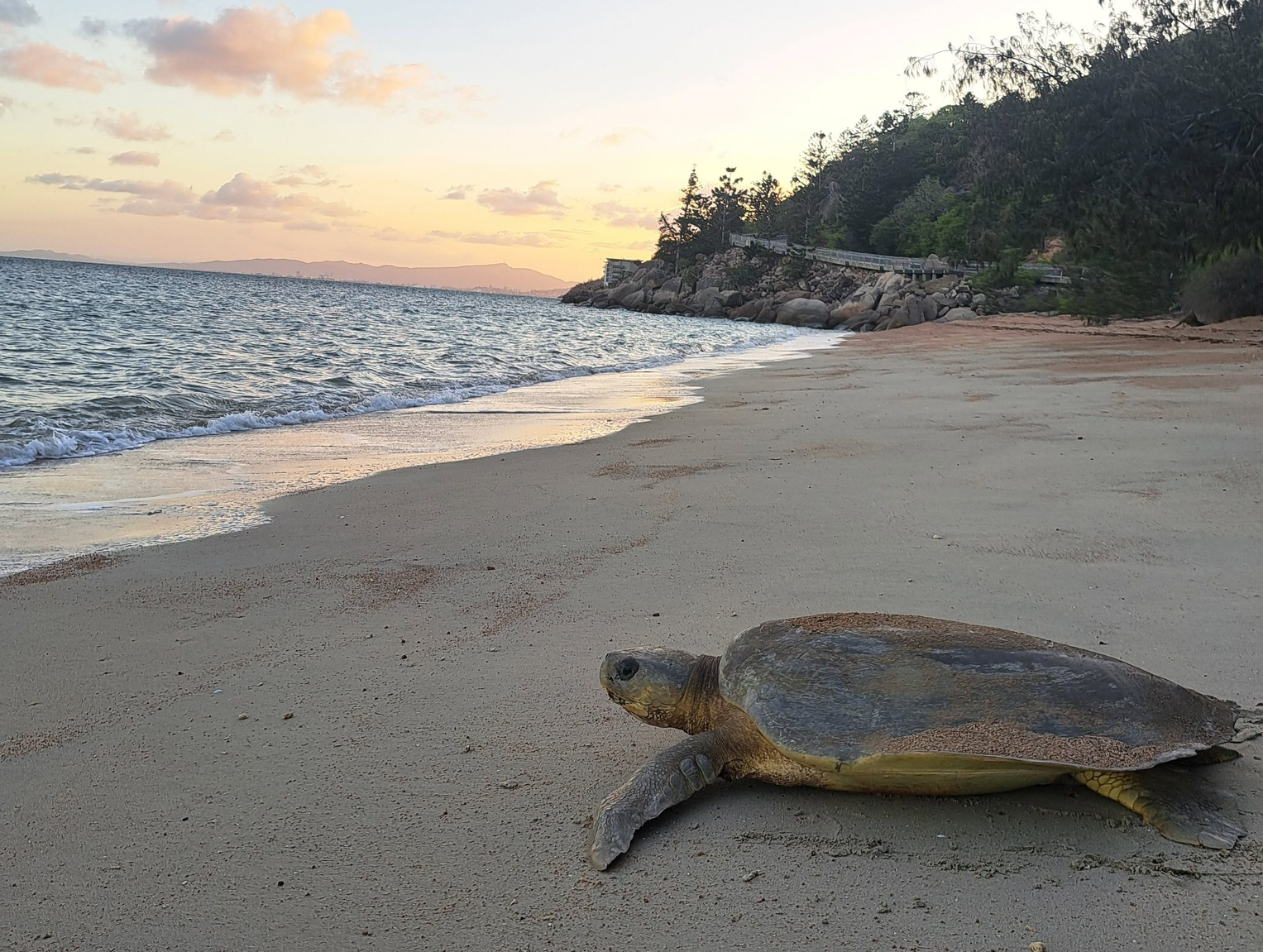
Flatback Turtle
Natator depressus
The Flatback is found only in the waters of northern Australia and nearby regions, making it one of the most uniquely Australian sea turtles. It is named for its relatively low, flat shell and is usually associated with soft-bottom coastal habitats.
Status: Vulnerable
Photo: S Stevens
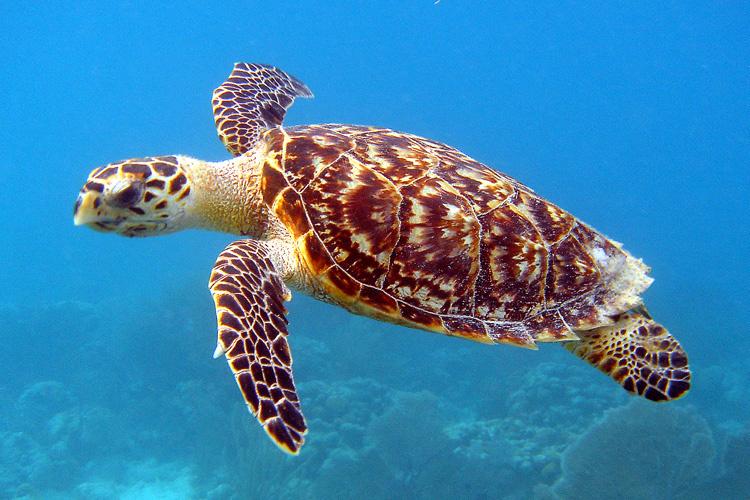
Hawksbill Turtle
Eretmochelys imbricata
Hawksbills are beautifully patterned turtles with a narrow, pointed beak that allows them to feed among coral reefs. They play an important role in reef ecology, particularly through feeding on sponges and other invertebrates.
Status: Critically Endangered
Photo: T. Moore, NOAA
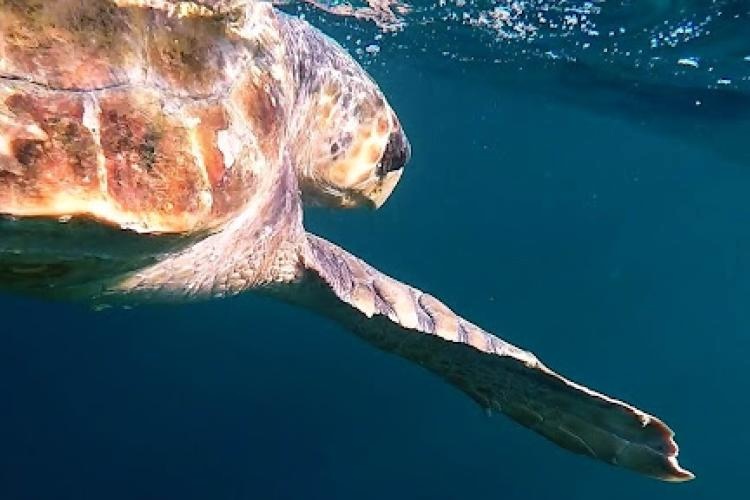
Loggerhead Turtle
Caretta caretta
Loggerheads are powerful turtles with large heads and strong jaws adapted for crushing hard-shelled prey such as crabs, molluscs and sea urchins. They are wide-ranging and migrate long distances between feeding and nesting areas.
Status: Vulnerable
Photo: NOAA Fisheries
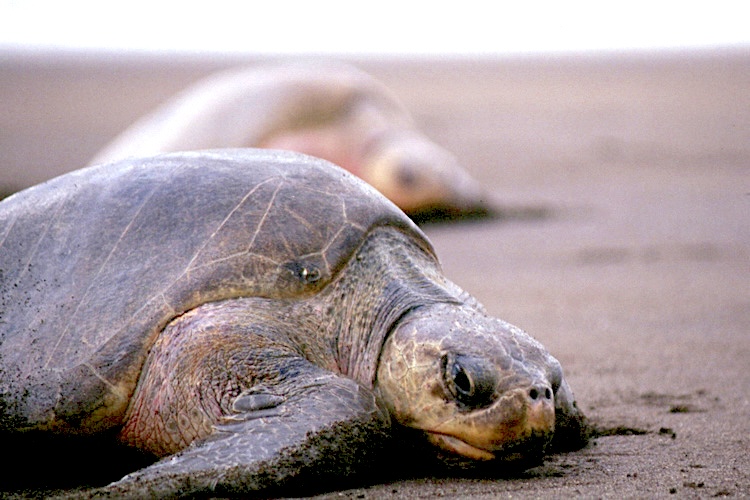
Olive Ridley Turtle
Lepidochelys olivacea
The Olive Ridley is one of the smaller sea turtle species and is best known for mass nesting events called arribadas, where thousands of females come ashore together. They occur in tropical waters worldwide.
Status: Vulnerable
Photo: Kate Sampson, NOAA Fisheries
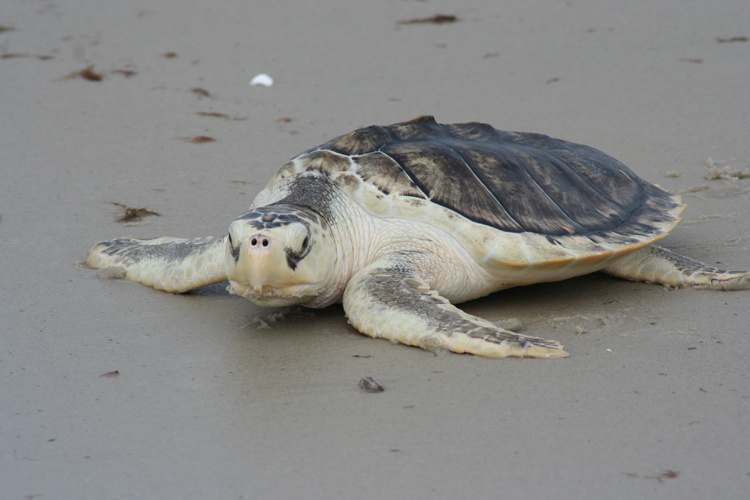
Kemp's Ridley Turtle
Lepidochelys kempii
Kemp's Ridley is the rarest sea turtle species and is found mainly in the Gulf of Mexico and western Atlantic. It is a small turtle with a rounded shell and is also known for mass nesting behaviour.
Status: Critically Endangered
Photo: Julien Renoult
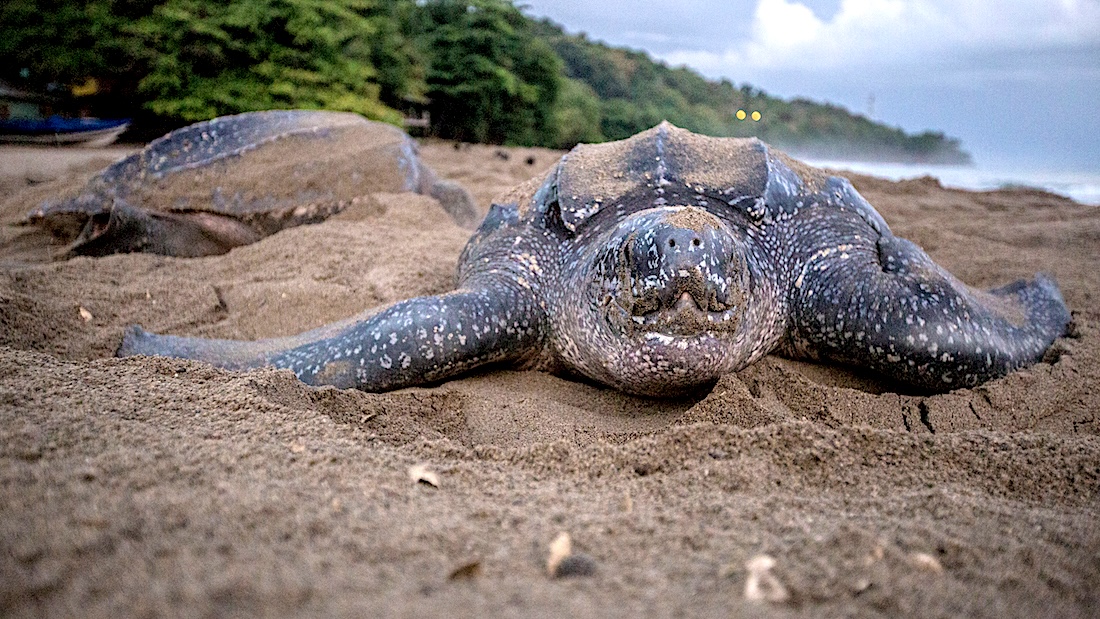
Leatherback Turtle
Dermochelys coriacea
The Leatherback is the largest living sea turtle and one of the most remarkable reptiles on Earth. Unlike other sea turtles, it has a leathery, flexible shell rather than a hard bony carapace. Highly migratory, feeding mainly on jellyfish.
Status: Vulnerable
Sea Turtles in Our Region
While all seven sea turtle species are extraordinary, the waters around Magnetic Island are especially important for three: the Green Turtle, Flatback Turtle and Hawksbill Turtle.
These are the species most likely to be encountered in local coastal habitats and through MINT's rehabilitation, stranding response, monitoring and education work.
Why They Matter
Sea turtles are more than iconic marine animals. They help maintain the balance of marine ecosystems, contribute to biodiversity, and connect people to the health of the ocean.
Protecting sea turtles means protecting reefs, seagrass meadows, beaches and the wider coastal environment on which so many species — including people — depend.